
How to Build a Multi-Asset Portfolio in Nigeria: A Practical Guide for Investors

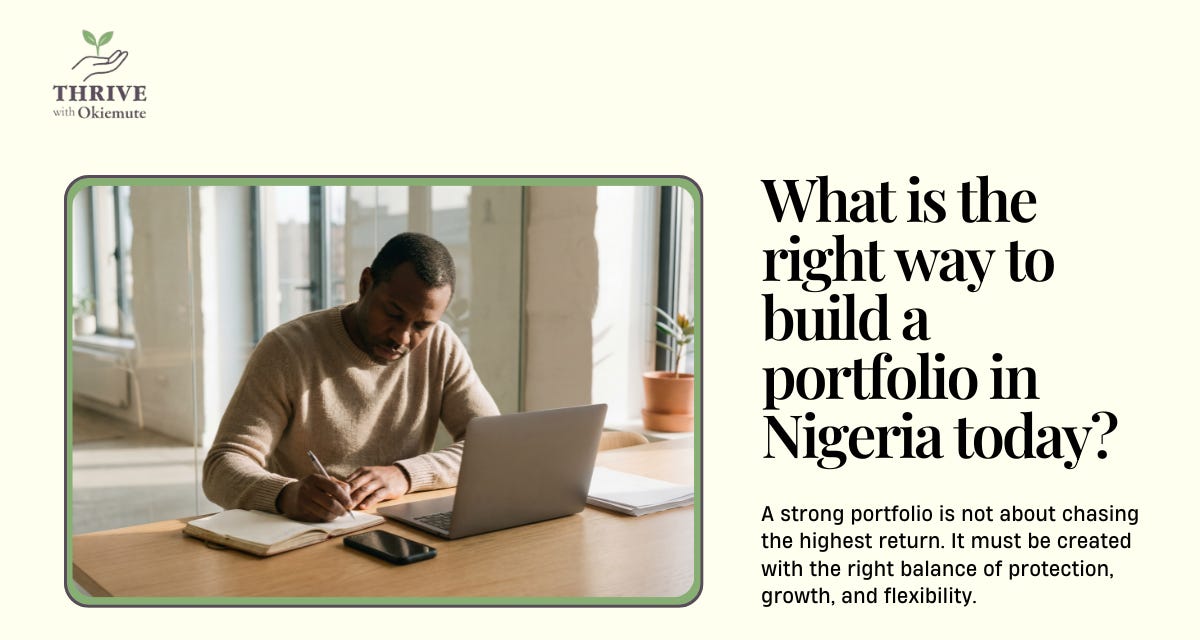
Ngozi and Ade had just received ₦5 million from a contract bonus. Unsure of what to do next with it, Ngozi parked everything in a savings account. While Ade spread his across random assets he had heard people mention— dollar savings, stocks, a friend’s real estate deal, and a mutual fund he didn’t fully understand.
Six months later, Ngozi felt dissatisfied with the reduction of the value of her money due to inflation while Ade got mixed results. One part grew, one part dipped, and one part he couldn’t even track.
This led them to ask this burning question: “What is the right way to build a portfolio in Nigeria today?”
Here is a simple framework.
The 2026 Multi-Asset Structure (Simple, Not Complicated)
A strong portfolio is not about chasing the highest return. It must be created with the right balance of protection, growth, and flexibility.
Think of it like building a house:
-
Foundation (Stability) – 40%
-
Money market funds
-
Treasury bills
-
High-quality fixed income instruments
Purpose: protect capital and ensure liquidity
-
-
Growth Engine – 30%
-
Nigerian equities (selective, not random buying)
-
Global ETFs or dollar-linked equities
Purpose: long-term wealth creation
-
-
Inflation Shield – 15%
-
Dollar savings or FX-linked assets
-
Commodities exposure (where accessible)
Purpose: protect against naira volatility
-
-
Real Assets – 10%
-
Real estate funds or fractional property investments
Purpose: inflation-resilient income and value preservation
-
-
Opportunistic/Alternative – 5%
-
Private deals, fintech investments, or crypto
Purpose: high-risk, high-learning opportunities
-
Risk Matrix: Where Do You Sit?
Investor Type Risk Appetite Portfolio Tilt
Conservative Low 70% foundation / 30% growth
Balanced Medium 40% foundation / 30% growth / 30% others
Aggressive High 20% foundation / 50% growth / 30% alternatives
Ngozi realised she was conservative but behaving like an aggressive investor, and Ade discovered he was the opposite.
Decision Flowchart (Before You Invest)
Ask yourself:
Do I need this money within 12 months?
→ Yes: Money market or T-bills
→ No: Continue
Can I tolerate short-term loss?
→ No: Prioritise fixed income + FX protection
→ Yes: Continue
Do I understand the asset clearly?
→ No: Don’t invest yet
→ Yes: Allocate capital
Am I diversified across at least 3 asset classes?
→ No: Rebalance
→ Yes: Maintain and review quarterly
What Most People Miss
The goal is not to pick “the best investment”, but to build a system that survives bad timing, inflation shocks, and emotional decisions.
Ngozi and Ade eventually restructured their portfolios using this framework, and for the first time, their money started to experience real measurable growth.
If you want help structuring your own portfolio based on your income, goals, and risk profile, you can reach out for a consultation with the link below.